Modal

08 / 12

Context
MA in Interactive Media
Team
To be confirmed
Expertise
Interactive Installation, Physical Computing, Data-Driven Art
Year
To be confirmed
Modal project

Overview

Modal is an interactive installation exploring the relationship between our physical bodies and digital identities. Developed as part of an MA in Interactive Media, it translates Facebook profile data into a moving field of pins and uses a Kinect to turn physical presence into a digital visualisation.

The project brings together two aspects of identity we often experience separately. By exchanging their forms, it invites participants to consider how they present themselves online and how they communicate through the body. Development moved from research and storyboards through a three-pin prototype to a full installation, combining interaction design, mechanical design, electronics, and data visualisation.

Research into embodiment, self-presentation, and critical design shaped an experience that invites participants to reflect on how they are represented.

  1. Make the digital physical

    Participants sign into their Facebook profile. Metrics from that profile become a numerical fingerprint that sets the height of physical pins, giving their digital presence a form in the room.

  2. Make the physical digital

    A Kinect captures the participant’s physical presence and translates it into a digital visualisation. The body becomes a source of data, completing the exchange between physical and digital forms.

  3. Question how we represent ourselves

    Online, we can carefully choose what we share. In person, our bodies communicate through movement and spontaneous reactions. By exchanging physical and digital forms, Modal invites participants to reflect on what each representation expresses and leaves out.

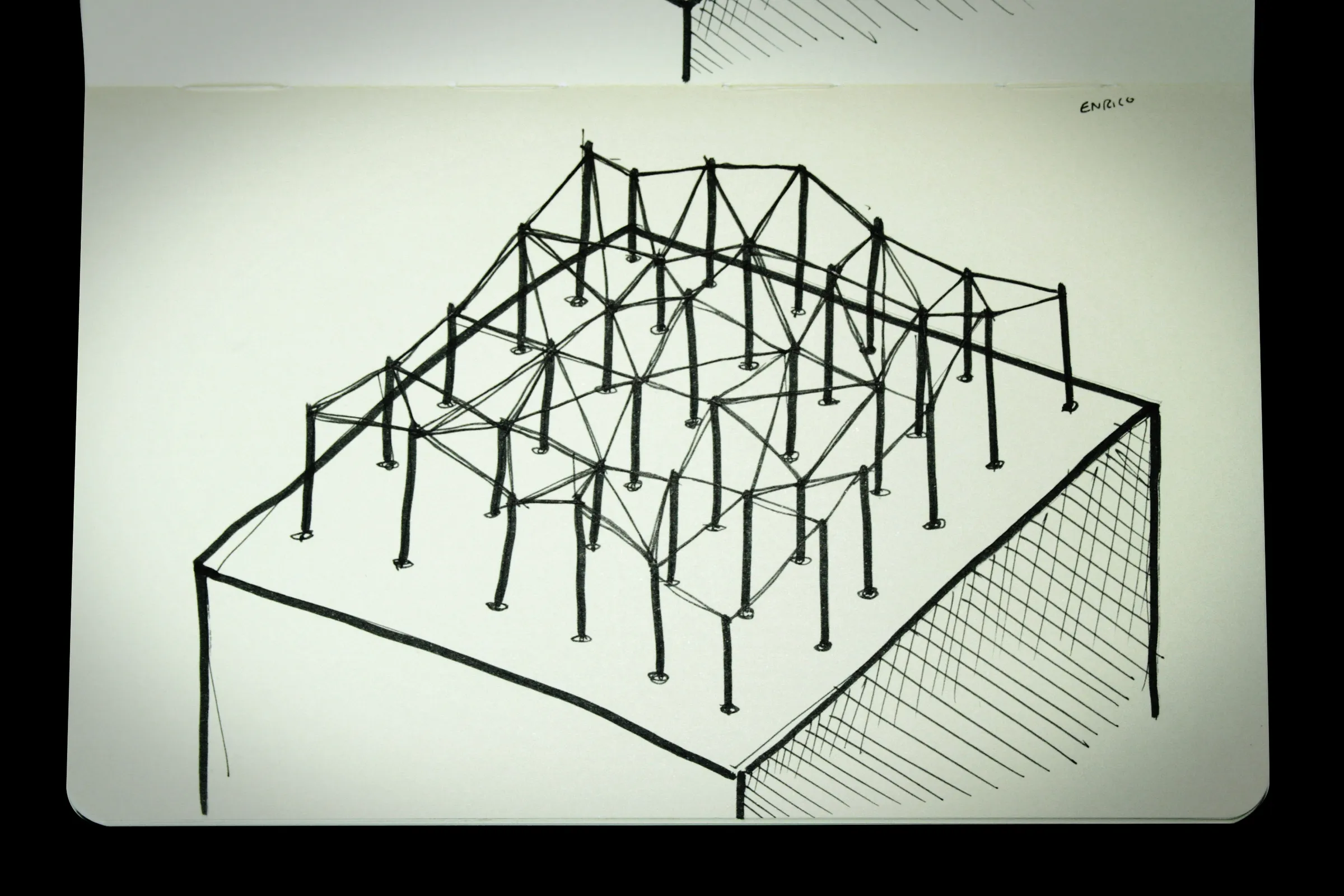
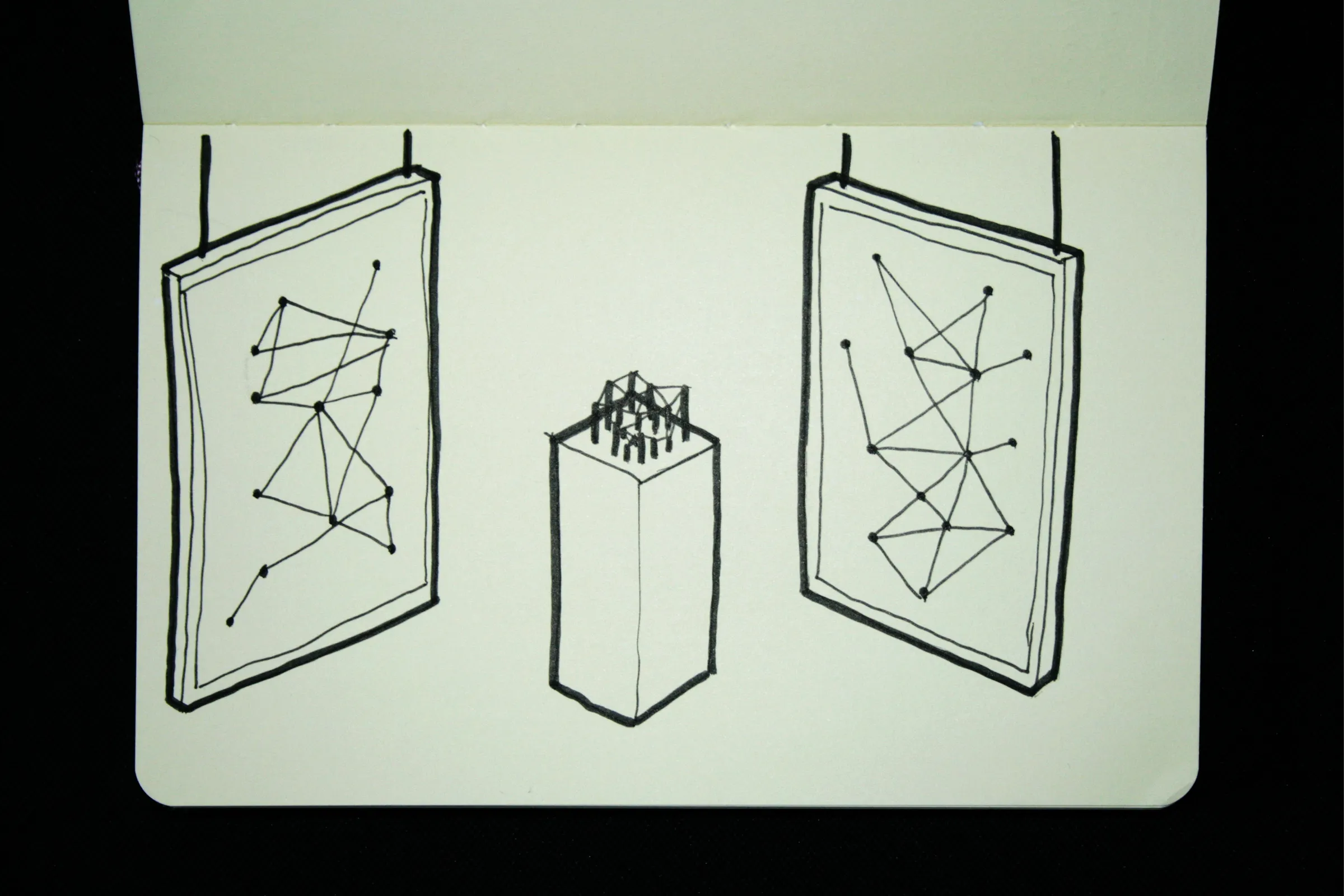
Early storyboards explored a journey from logging in to seeing personal data take physical form. Sketches considered how the participant, the pin surface, and projected visuals could share one space, bringing the relationship between body and digital identity into the room.
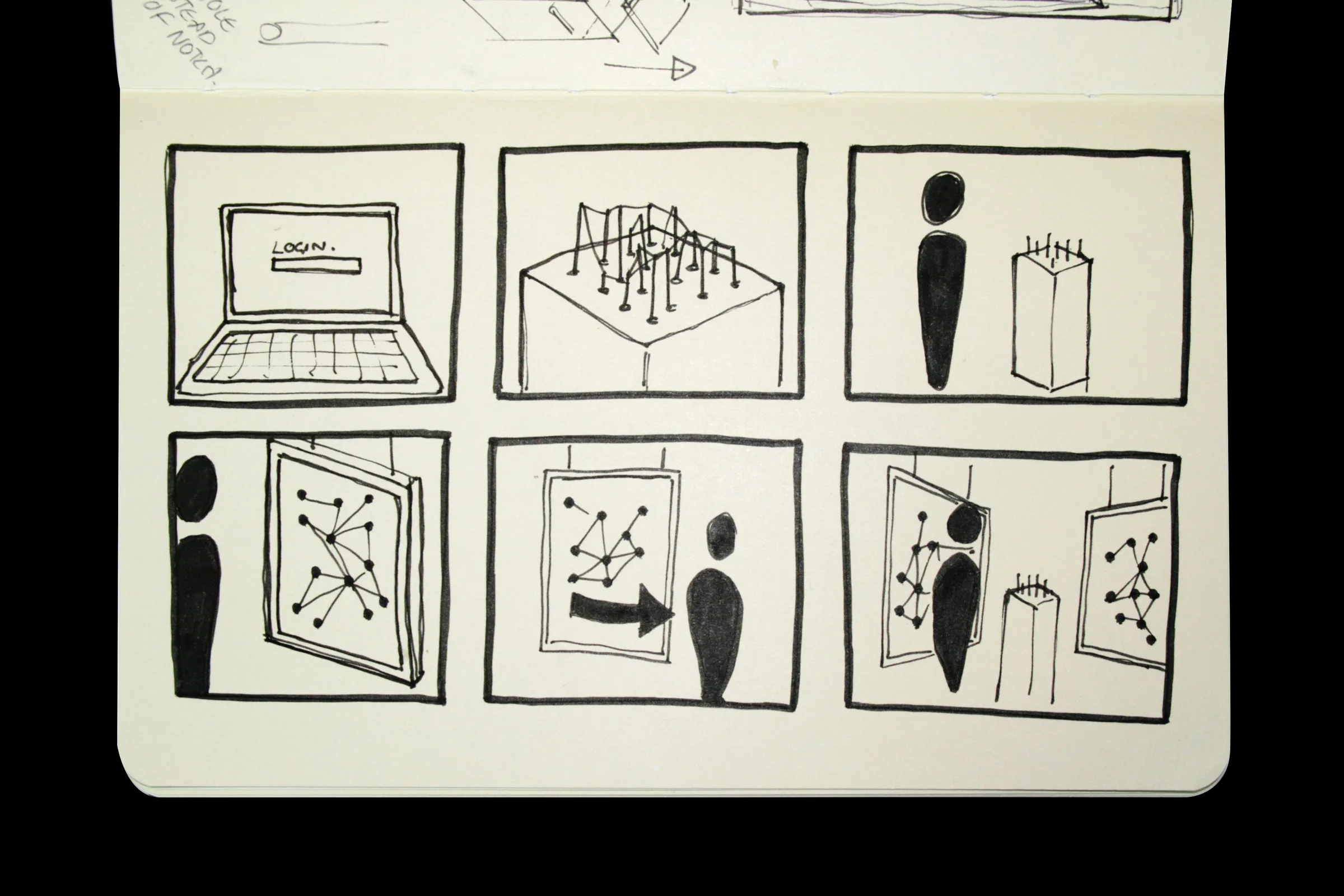
Six-panel storyboard showing a laptop login screen, a pin surface, a figure beside a plinth, and network diagrams displayed on panels around the visitor
Sketch of a tall plinth topped with pins, standing between two hanging panels that show network diagramsSketch of a grid of pins rising from a table, joined at their tips by lines that form a network

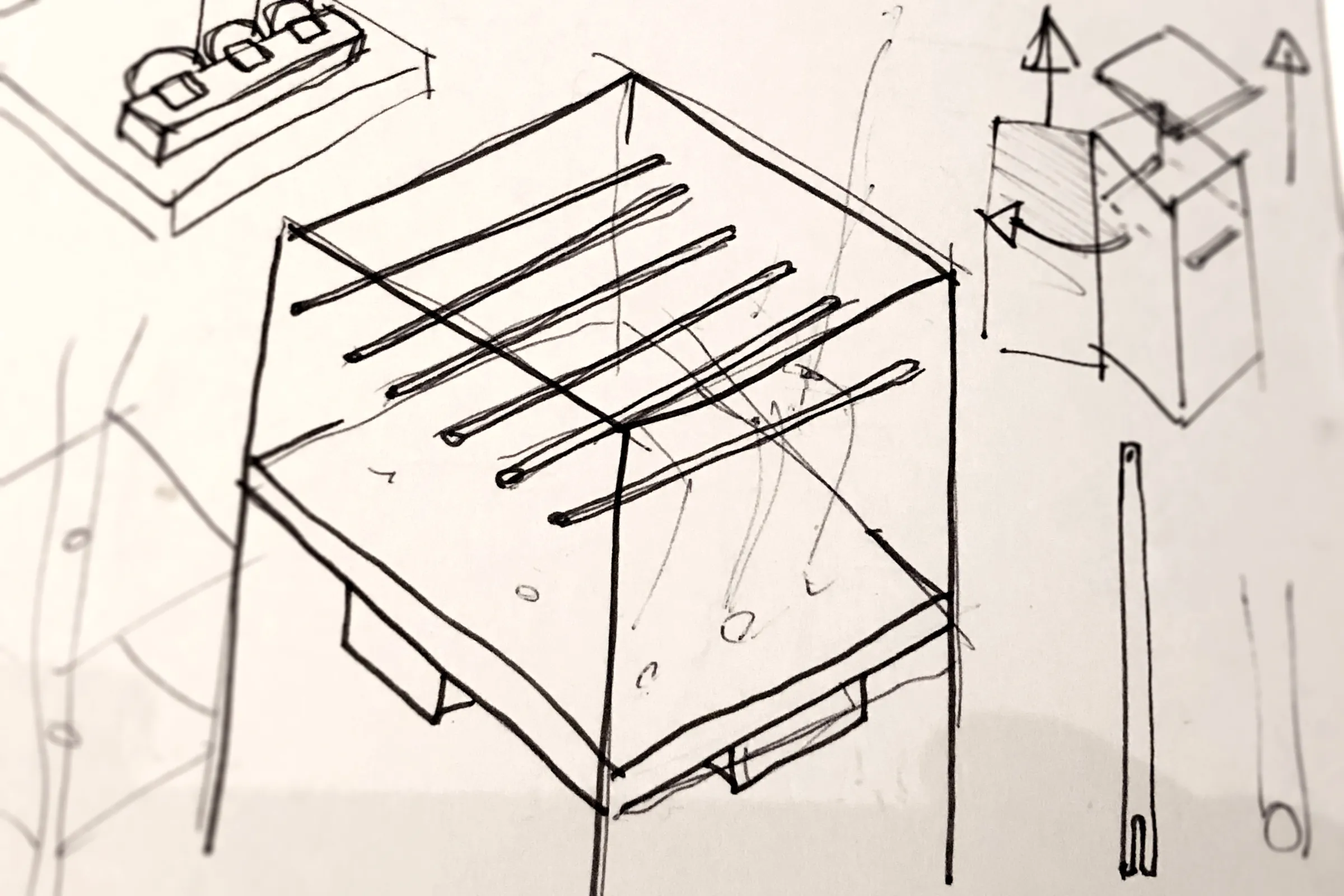
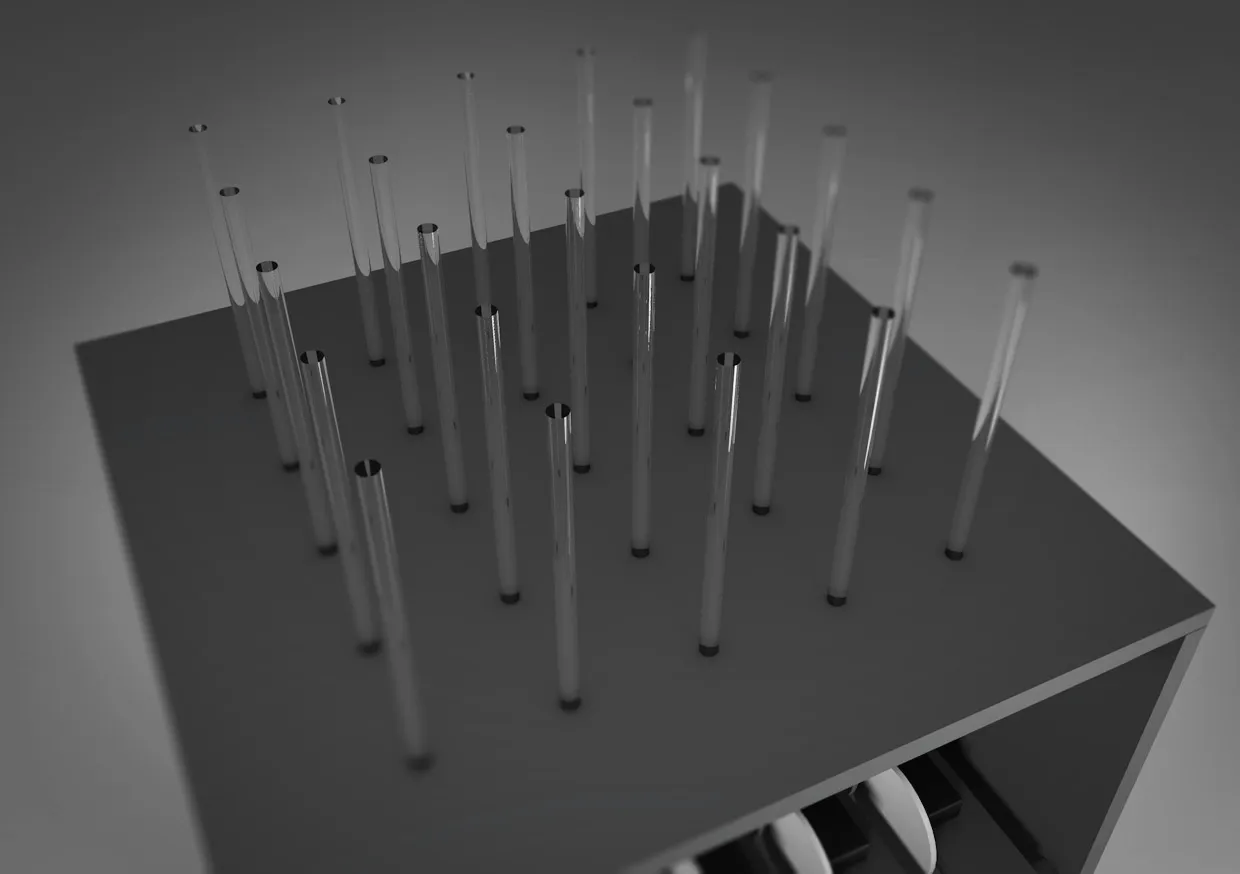
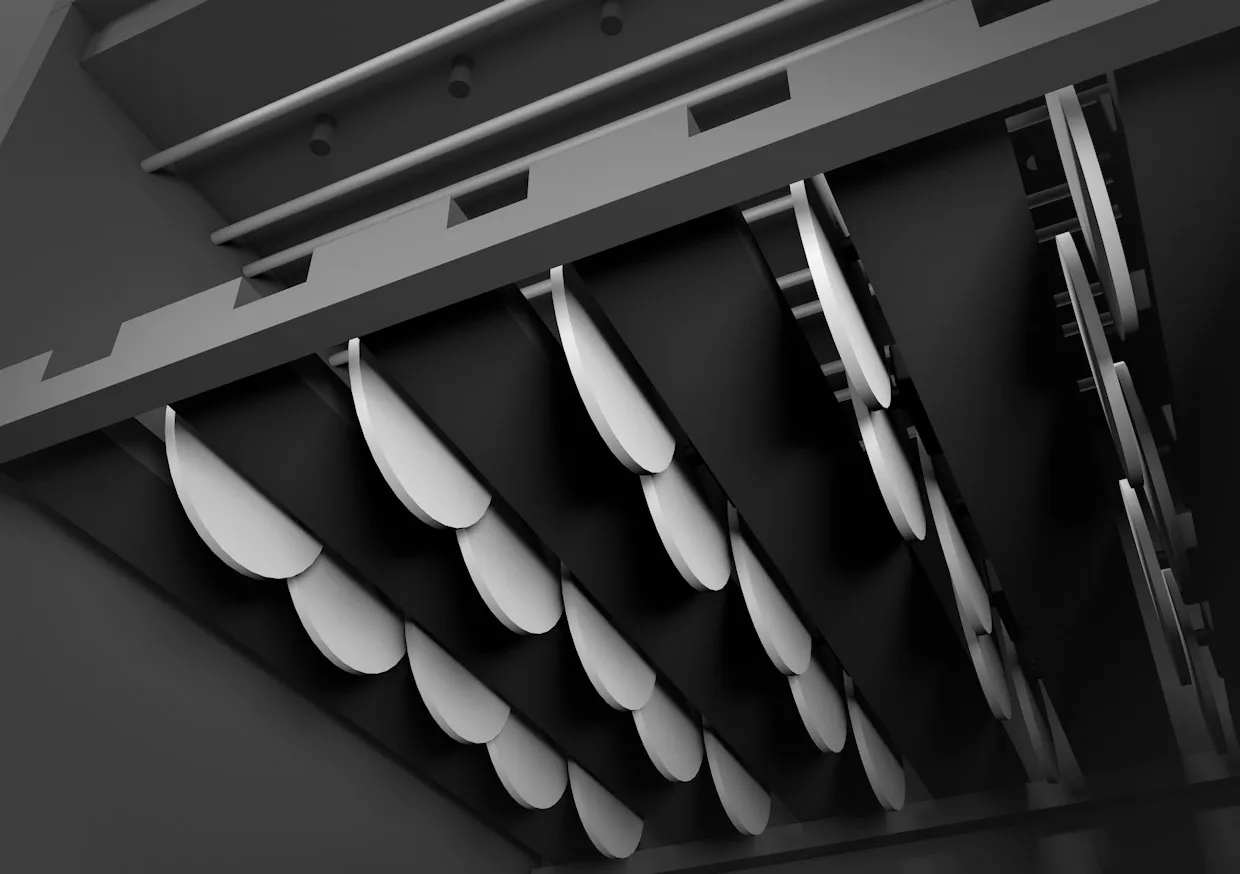
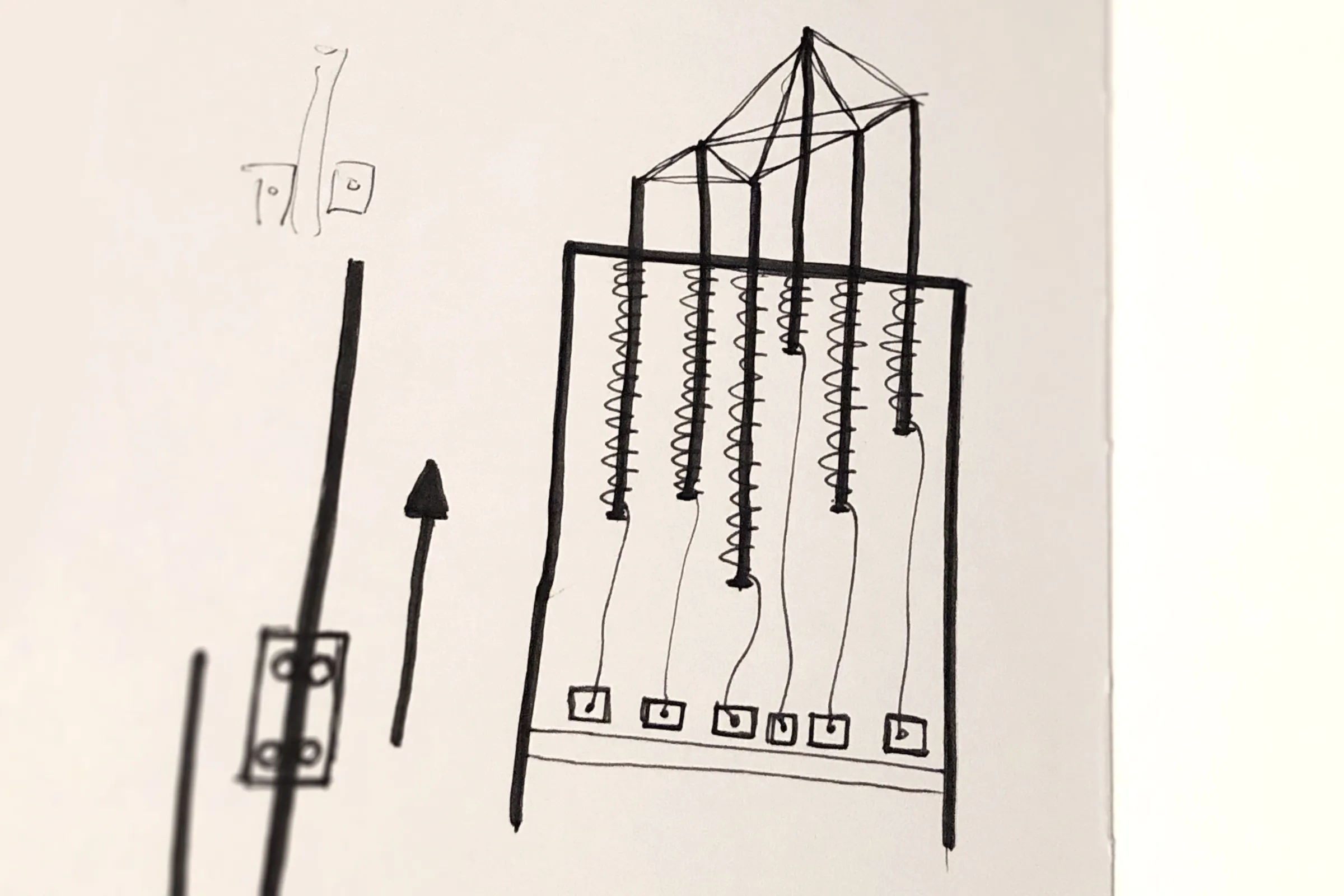
Each pin needed to rise and fall on its own, with every motor hidden. Sketches and 3D renders worked out a cabinet with the pins on top and rows of servo-driven discs below, which wind and release a thread to lift each pin. The shelves were slotted to make room for the wiring.
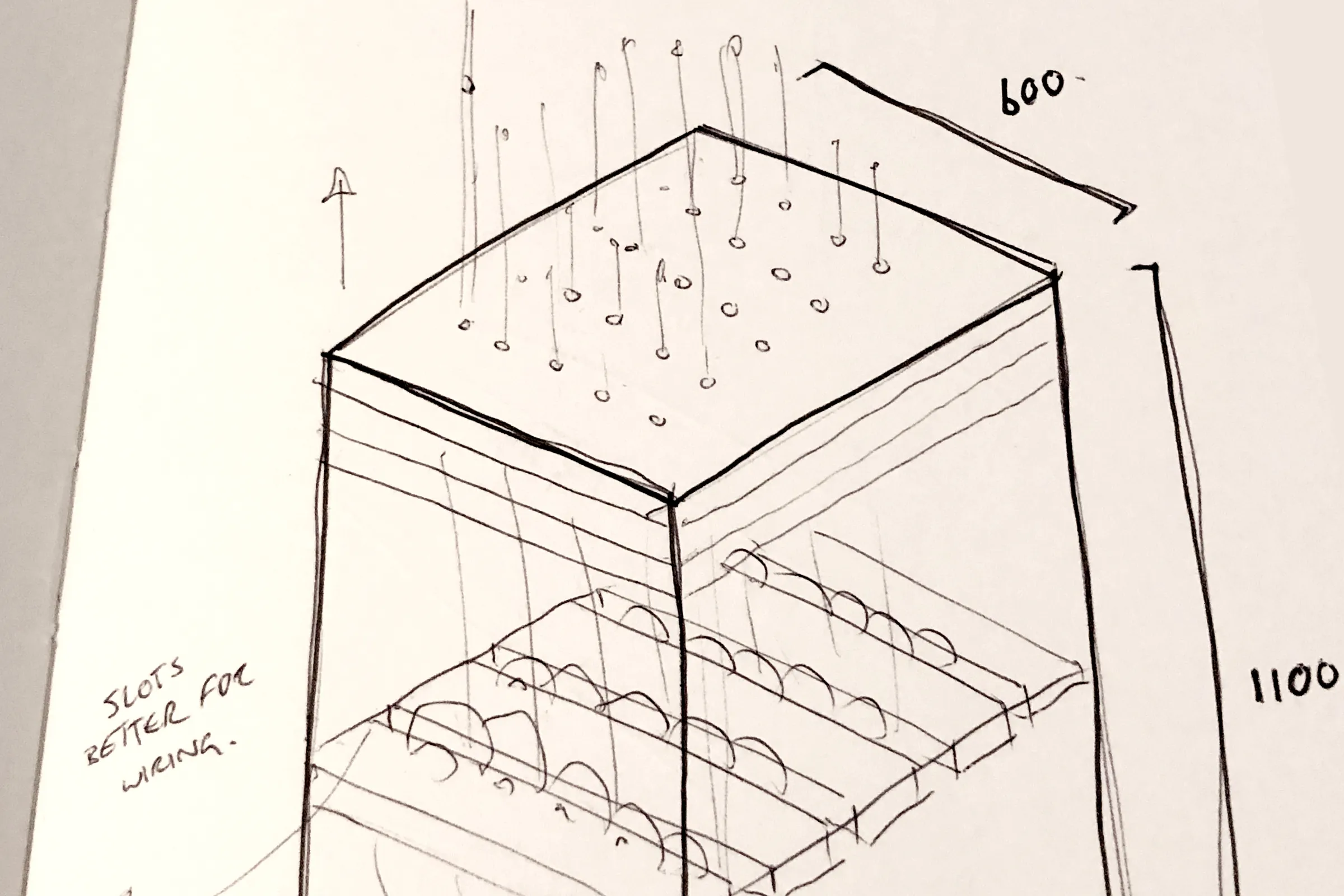
Sketch of a cabinet about 600 wide and 1100 tall, with pins on top, rows of discs on slotted shelves below, and a note reading slots better for wiring
Sketch of pins lifted by threads running down to a row of motors, with an arrow showing the upward movementSketch of the top of the cabinet with parallel guide rails and the pin openings below them3D render of a dark plinth with clear pins standing at different heights across its top3D render looking up at staggered rows of white discs mounted inside the cabinet beneath slotted shelves

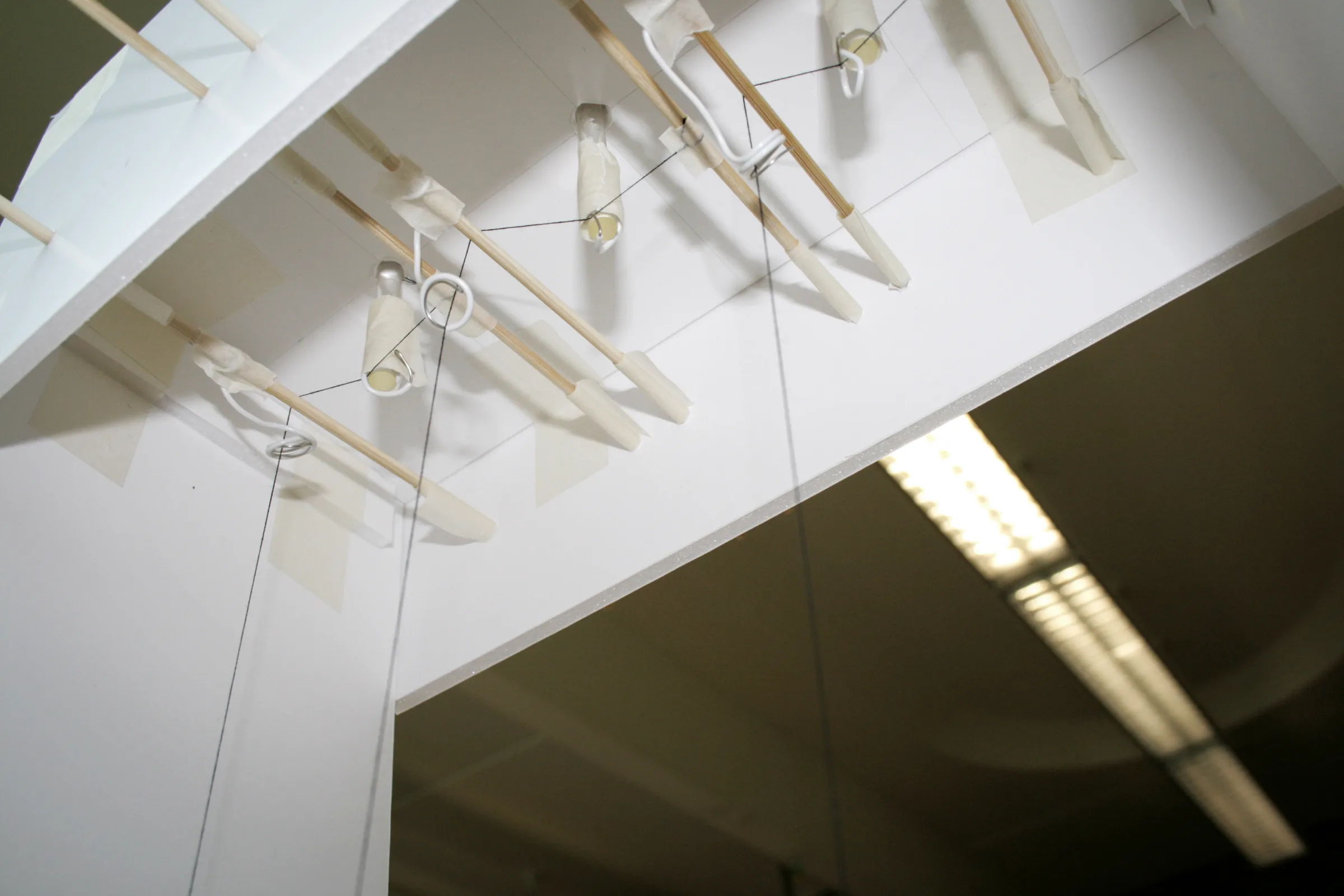
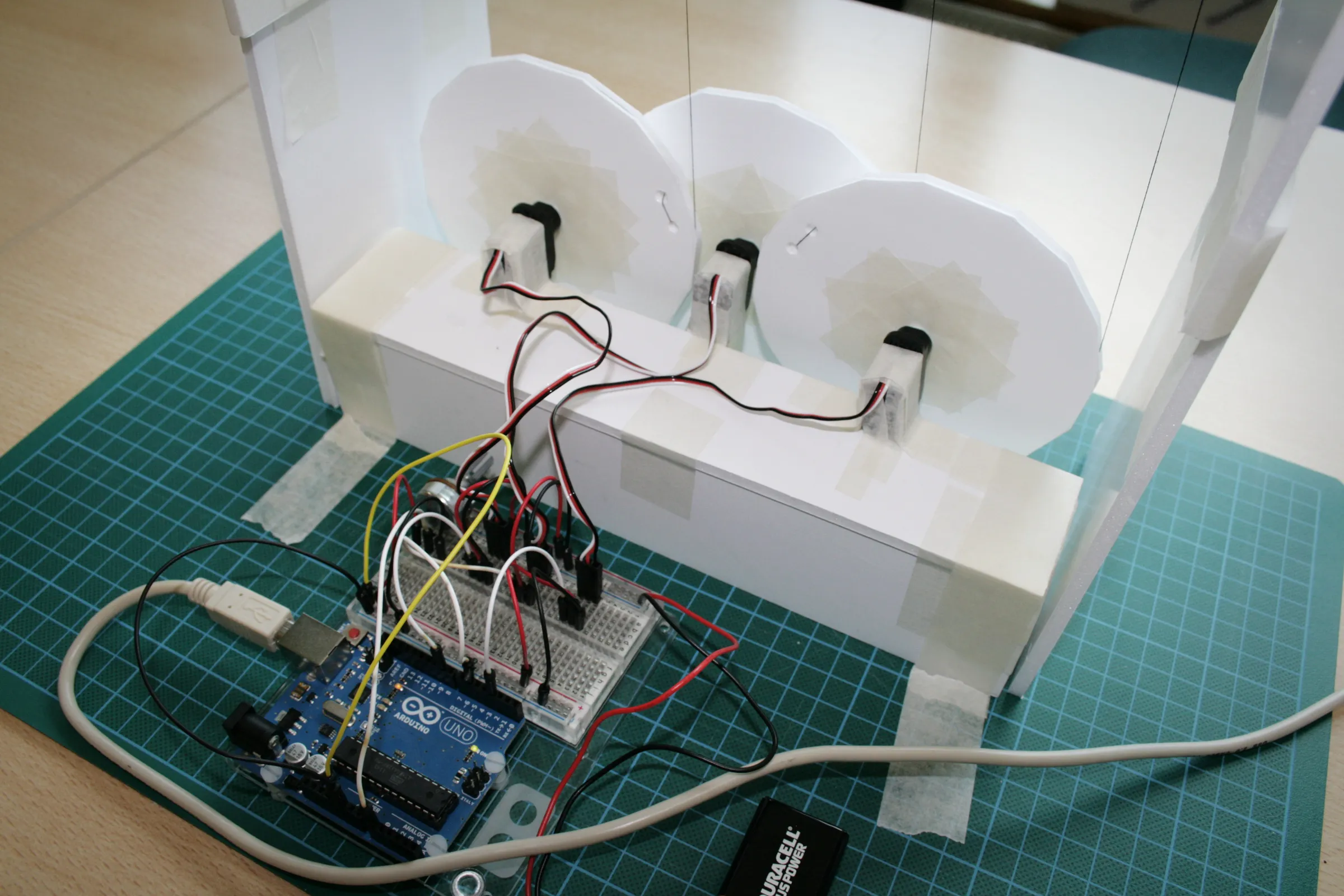
A foamboard prototype tested the mechanism at a small scale. Three servos, wired to an Arduino, turned card discs to pull threads over wooden guides and raise three pins through the top.
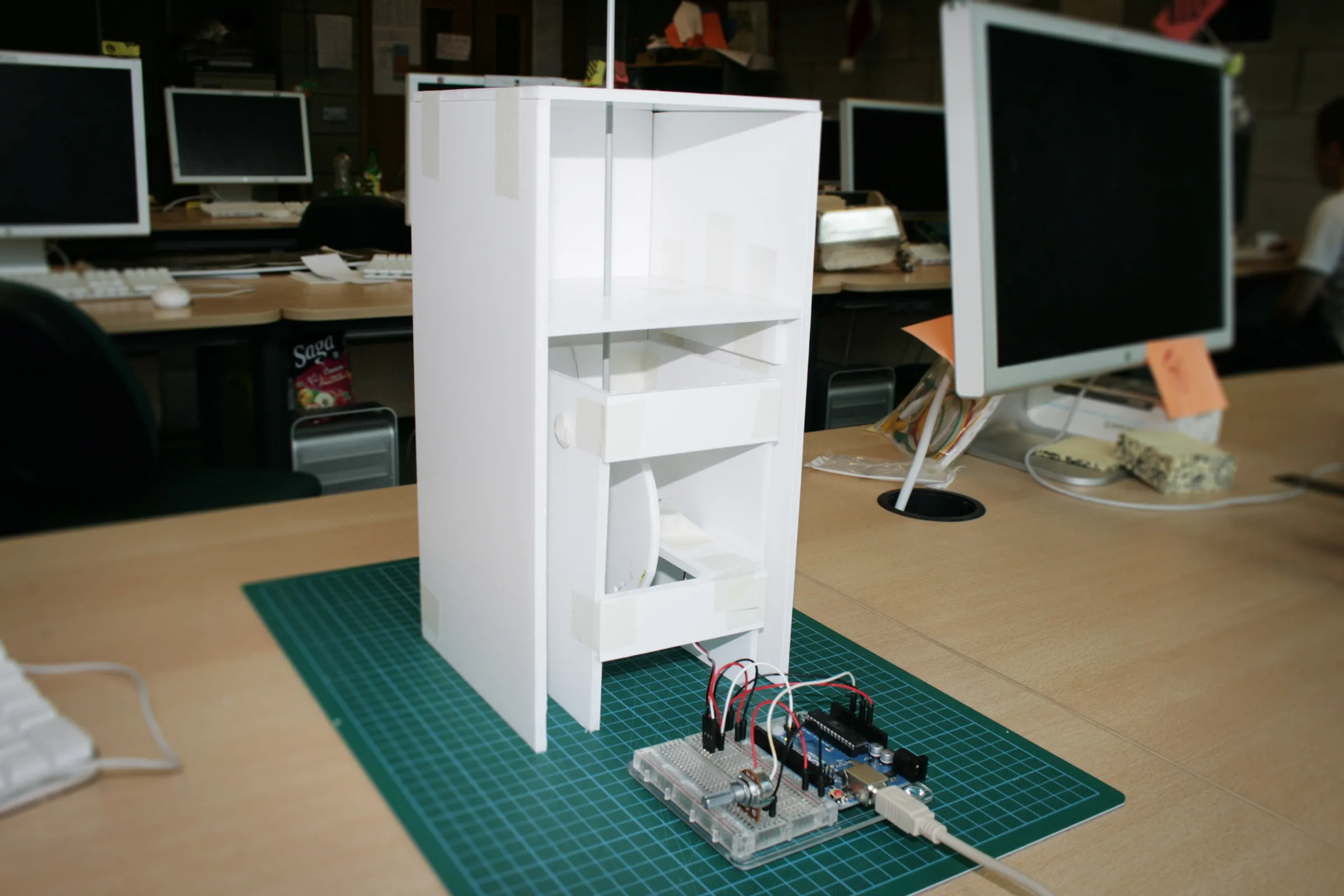
White foamboard prototype cabinet on a cutting mat, with a breadboard and Arduino wired to it at the base
Inside the prototype, three card discs mounted on servos, connected to an Arduino and breadboardView up into the prototype showing threads running over wooden dowel guides toward the pins

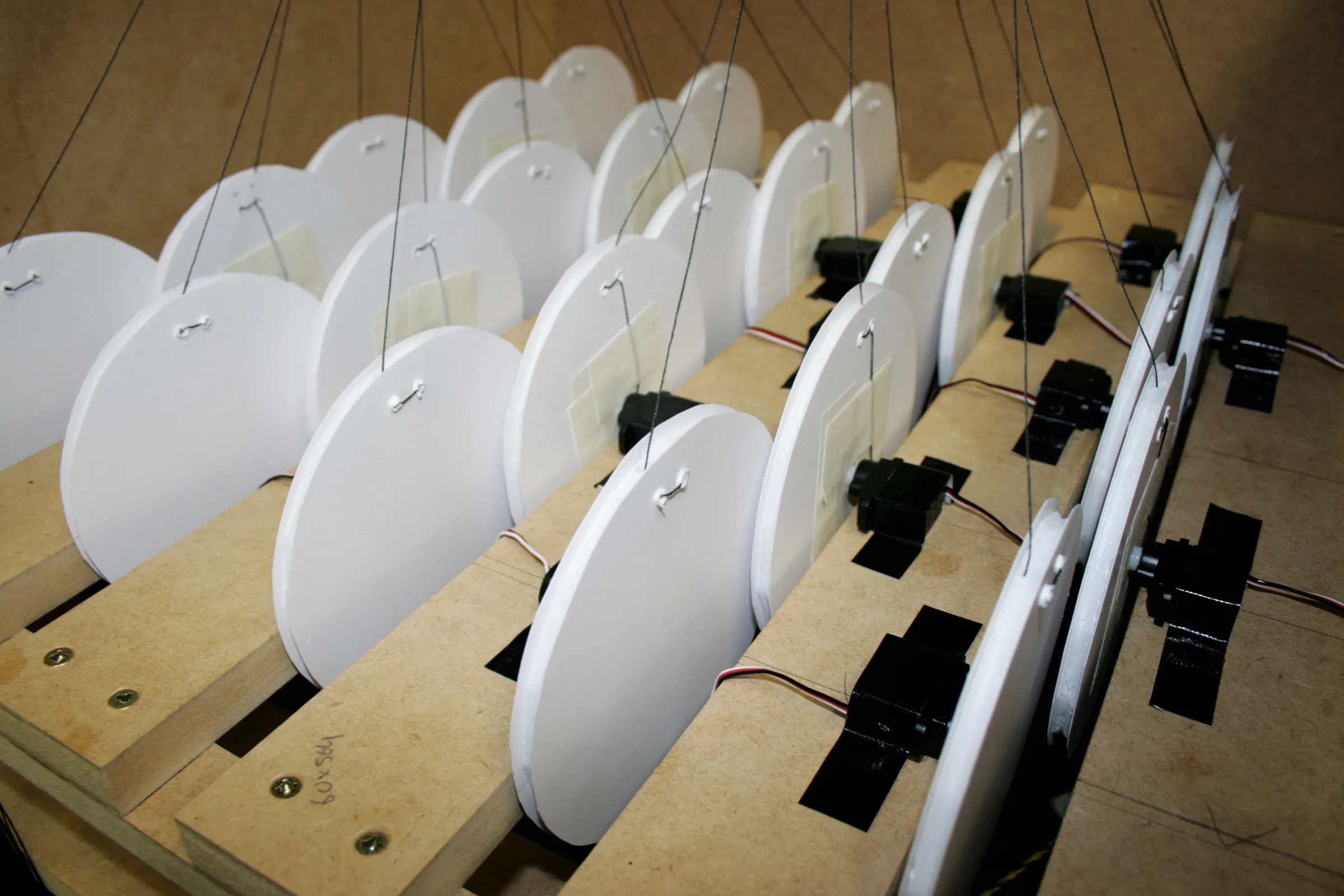
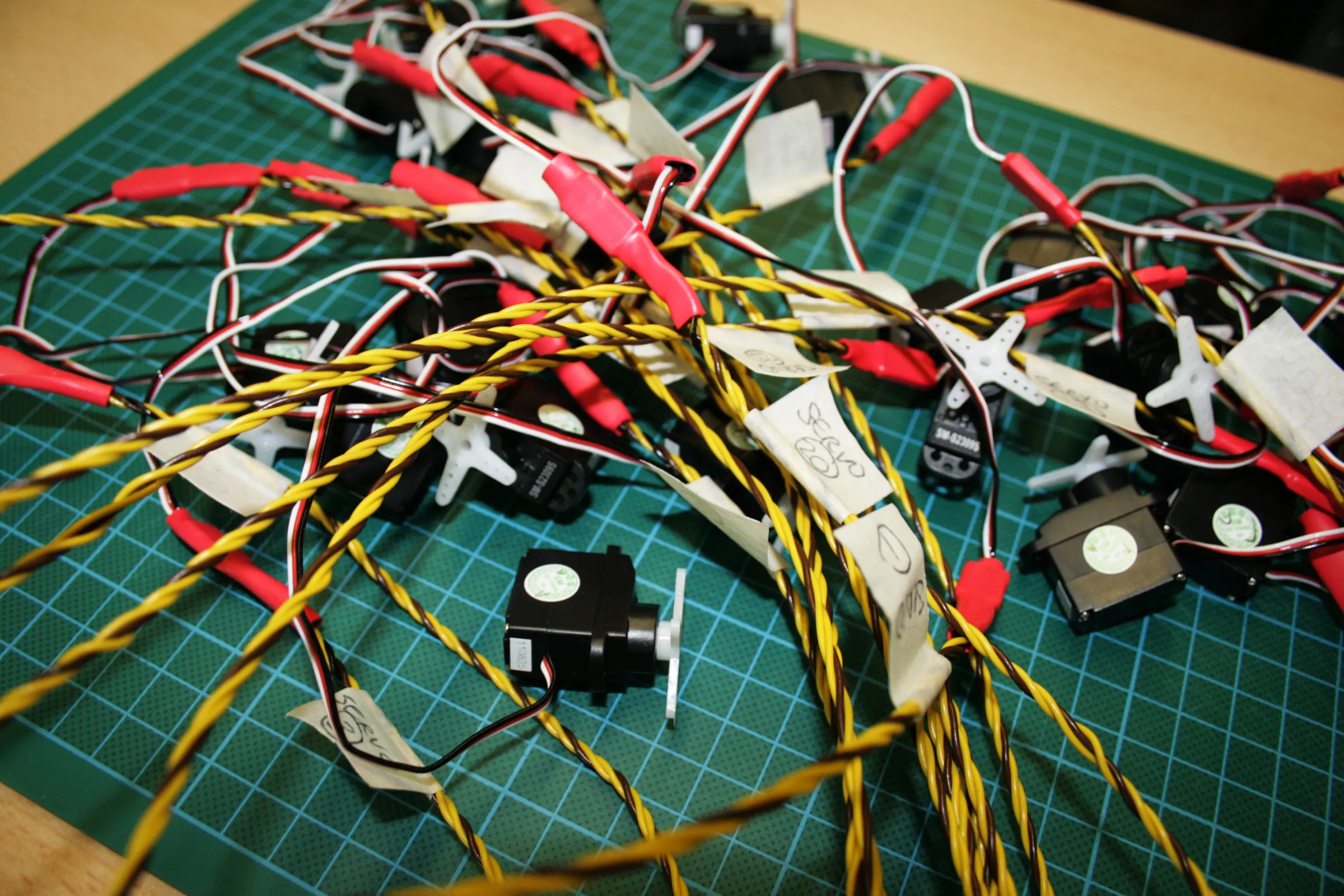
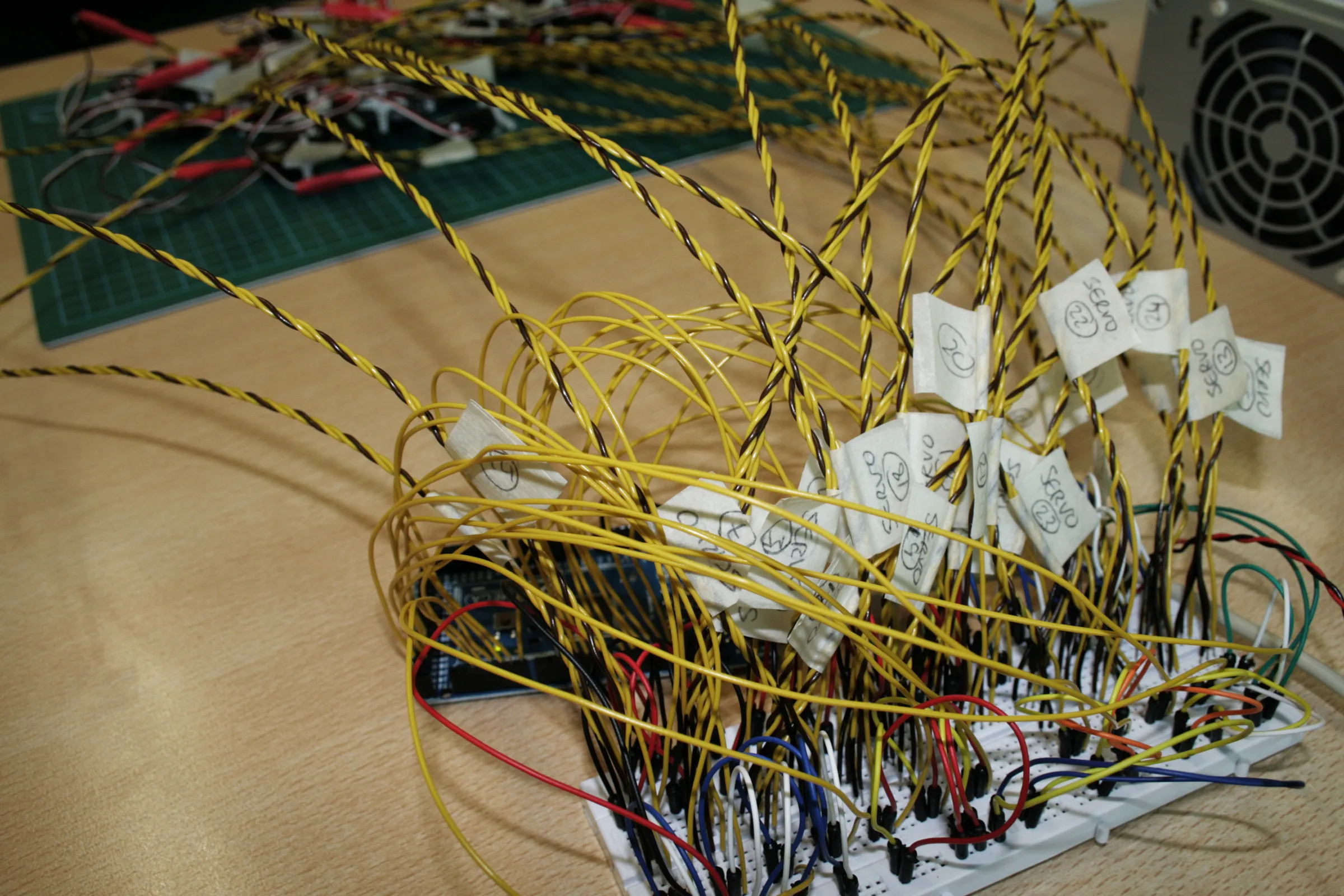
The full build scaled the prototype into a painted cabinet. Rows of servos and discs sit under metal guide rods, and every servo lead was labelled before being wired back to the Arduino.
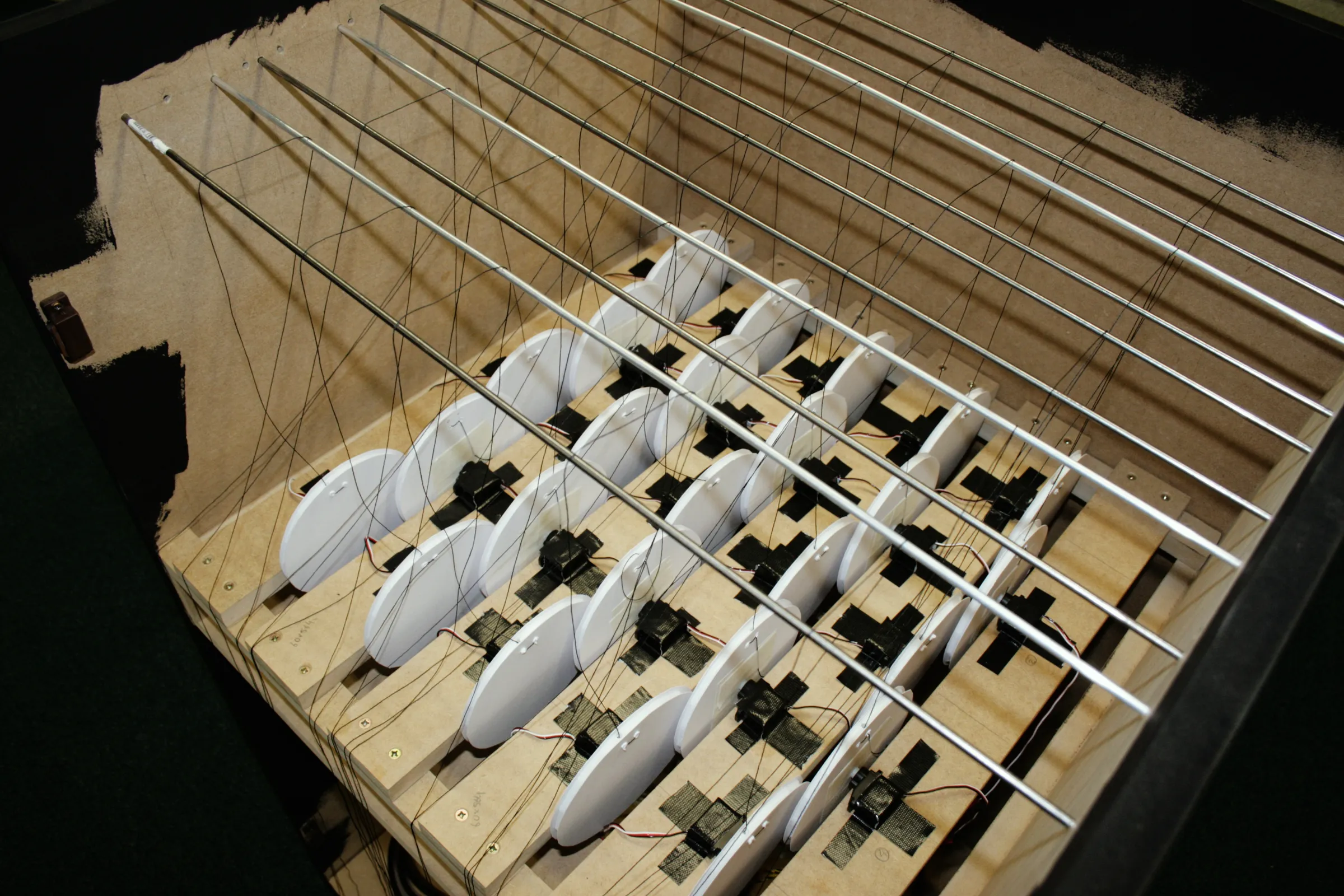
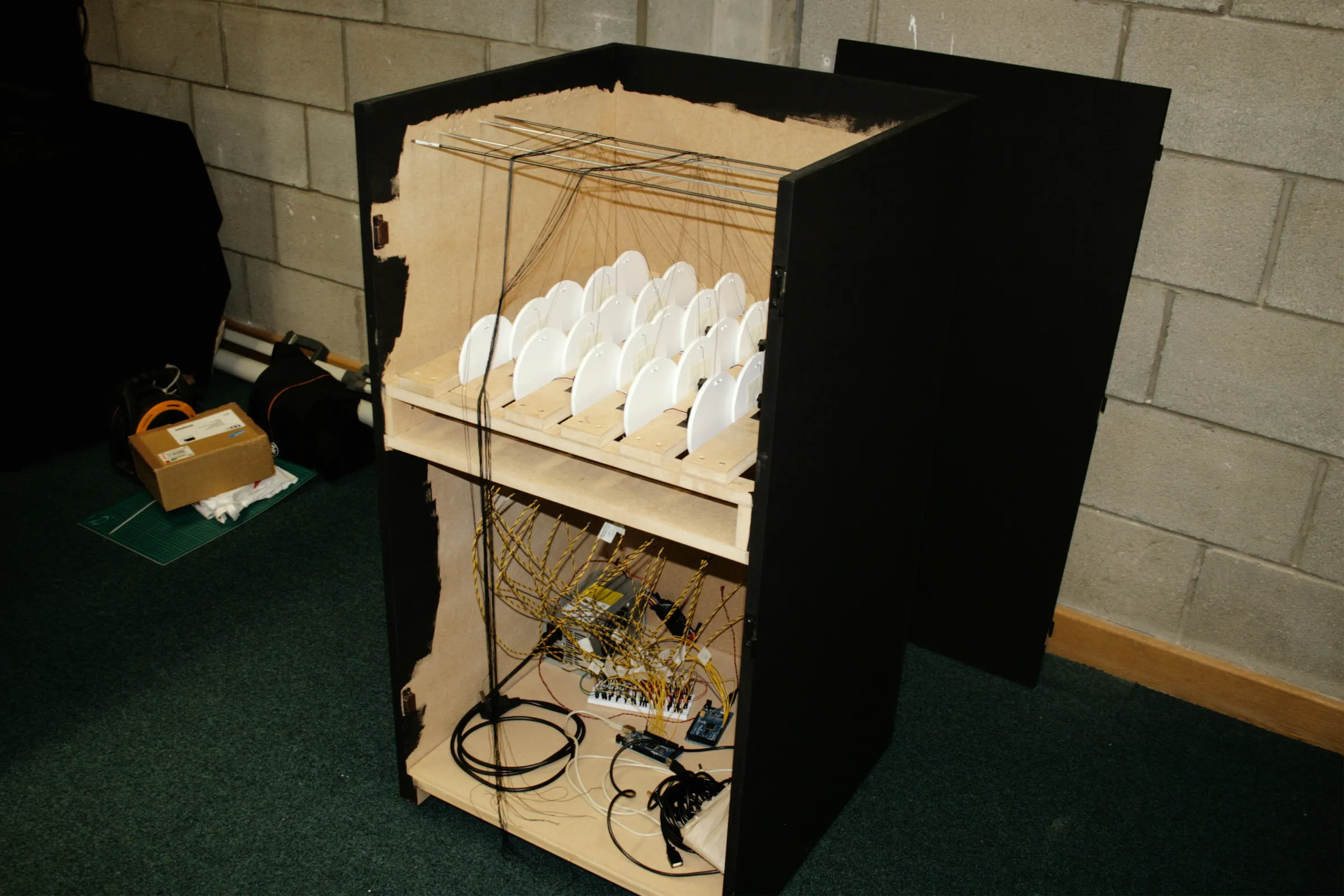
View into the top of the cabinet showing rows of white discs on servos, with threads running up to parallel metal guide rods
The cabinet opened up, with the disc shelf at the top and the Arduino and wiring on the floor belowClose-up of white discs mounted on black servos in slotted wooden shelves, with threads leading upwardServos on a cutting mat with twisted yellow and black leads, each marked with a numbered tape labelA tangle of labelled yellow servo leads running into a breadboard and Arduino beside a power supply

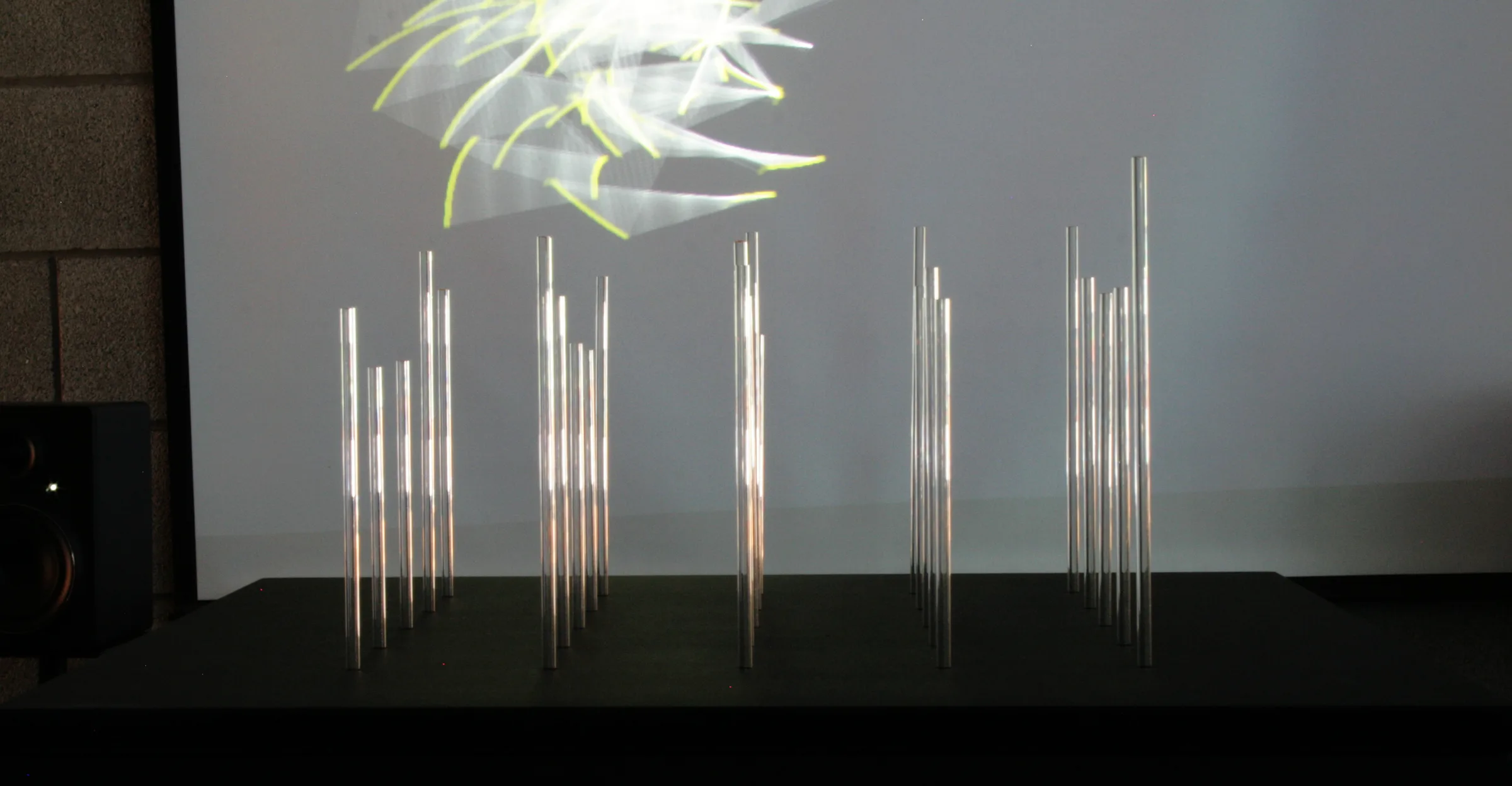
At the exhibition, visitors encountered the pin surface alongside the projected visuals. Profile data took physical form while the Kinect translated bodily presence into a digital representation. Bringing the two together was intended to prompt reflection on the relationship between the body and digital identity.
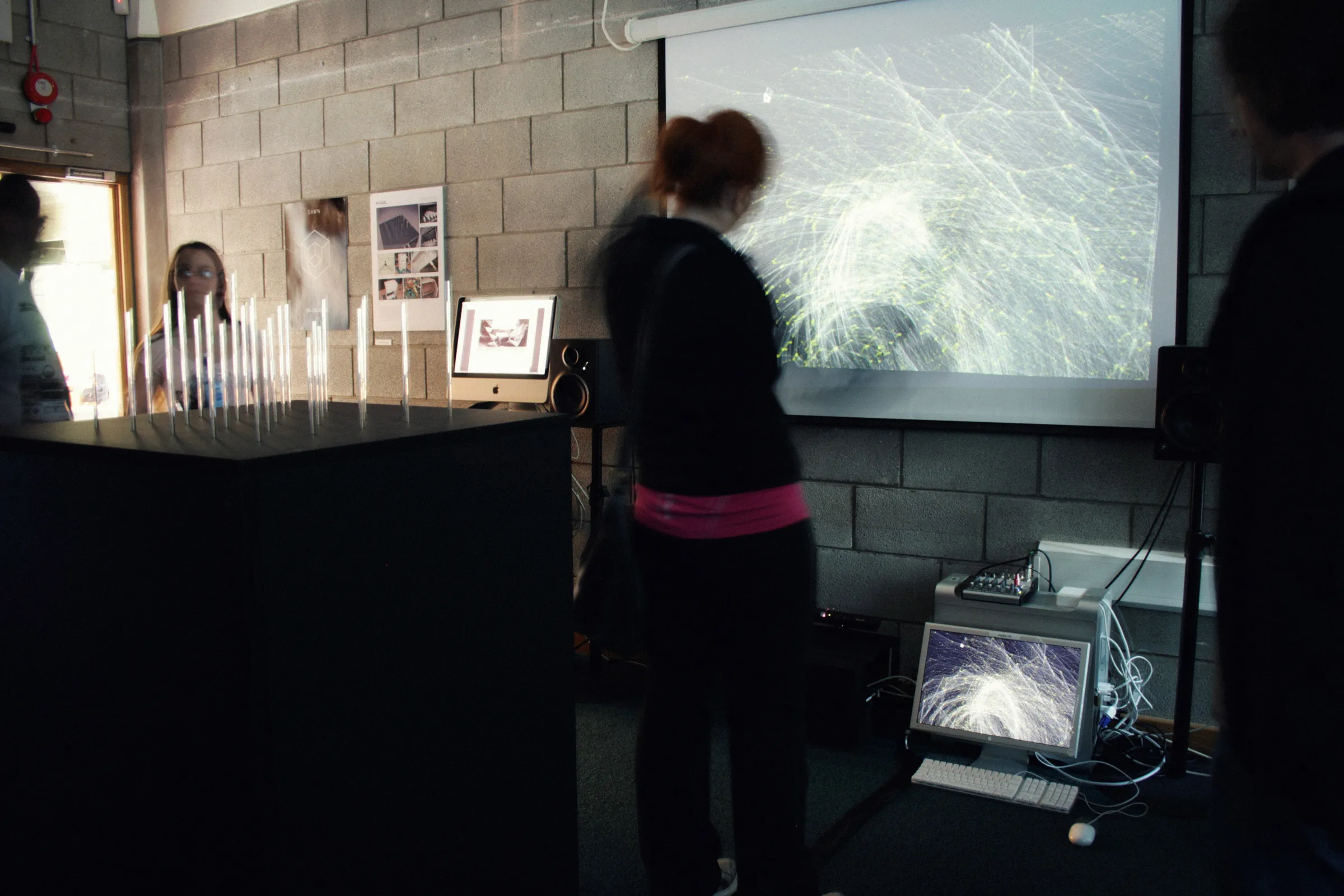
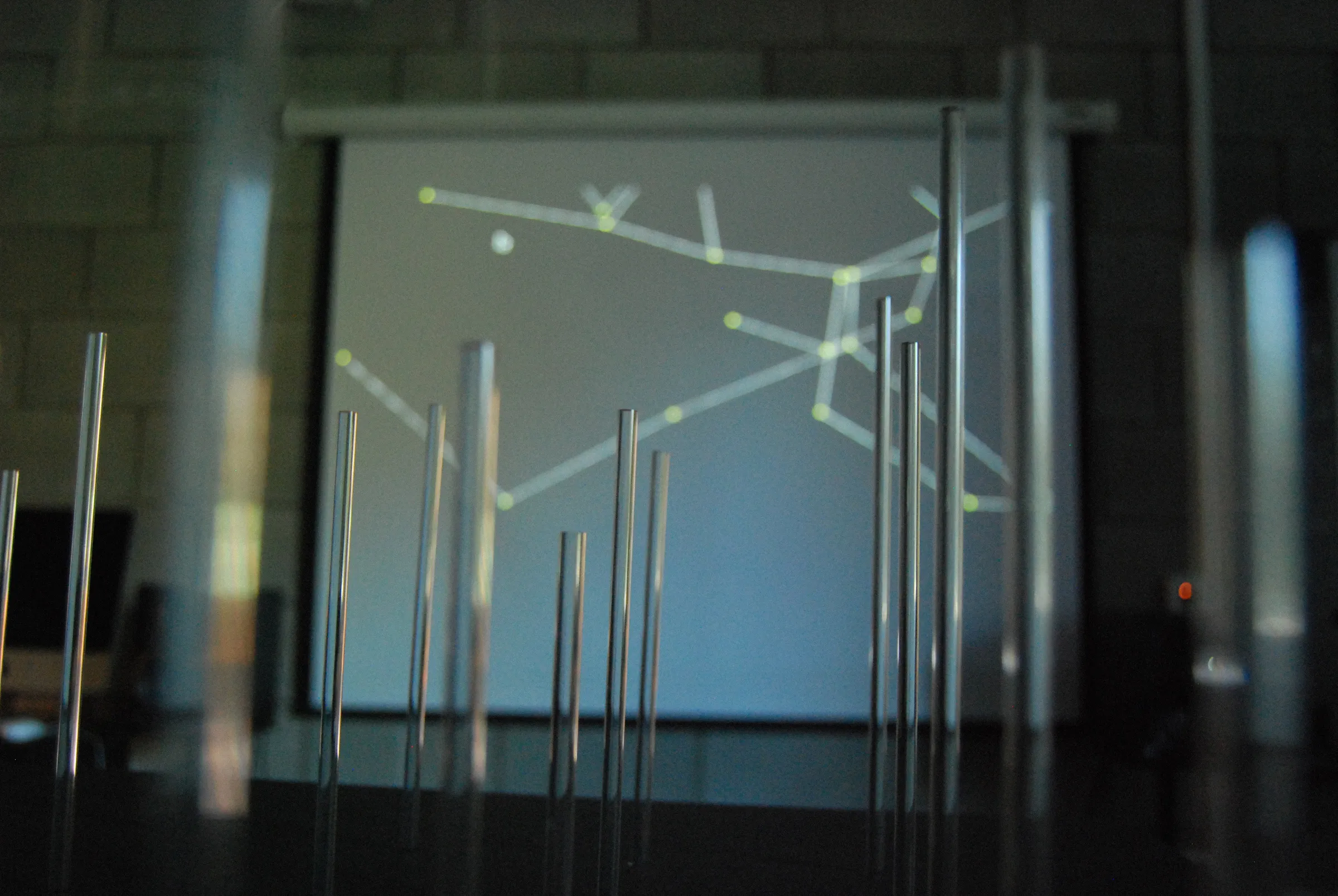
Visitors in a darkened room around the installation, with the pin plinth on the left and a projection of flowing lines on the wall
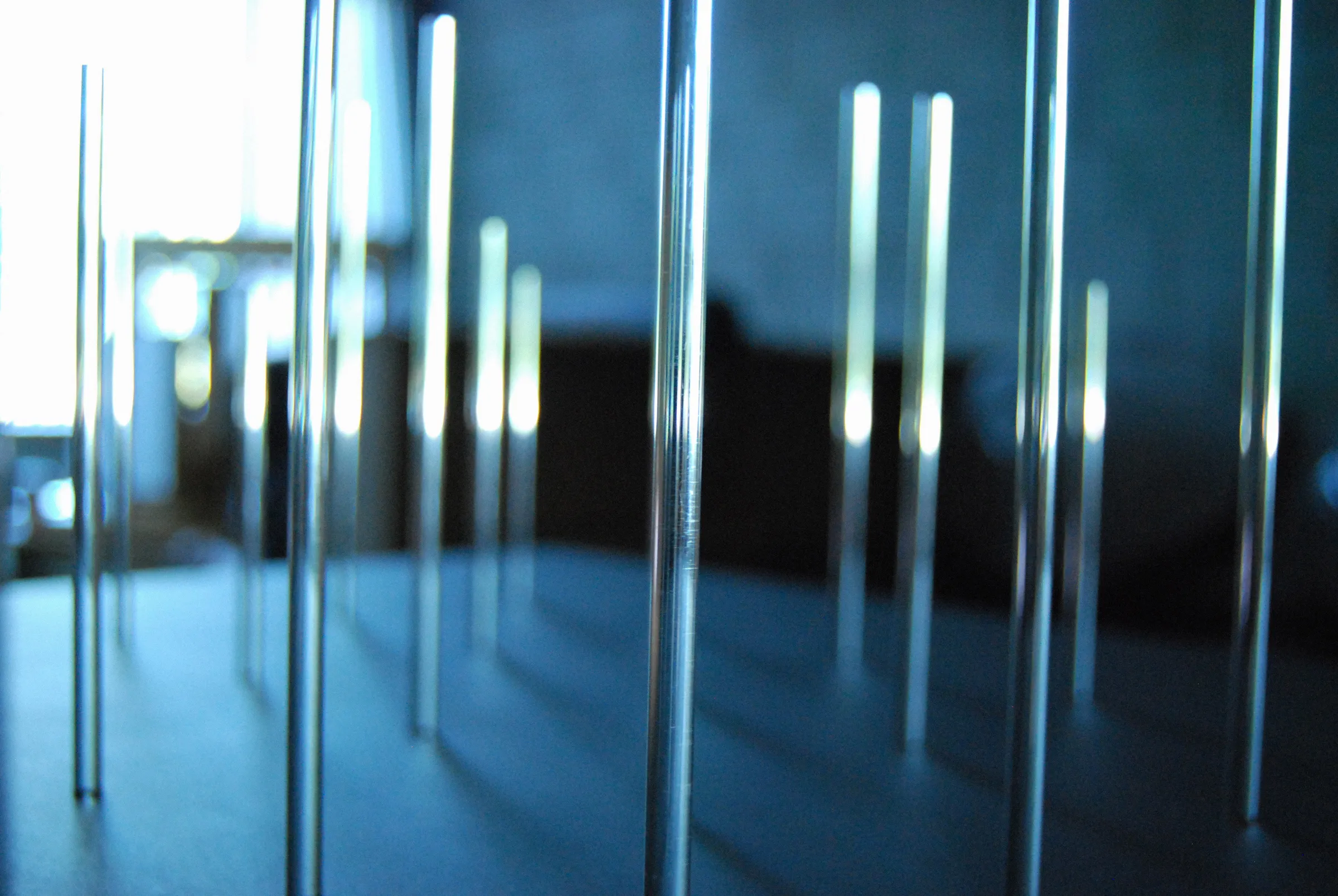
Pins at different heights in front of a projected network graph of connected nodesClose-up of metal pins at varying heights, lit in blue against a soft background